Call us now :08045804088
 Send Inquiry
 Send Inquiry
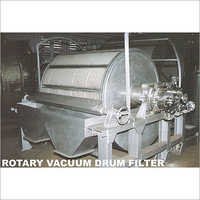
Rotary Vacuum Drum Filter
Price 100000 INR/ Unit
MOQ : 1 Unit
Rotary Vacuum Drum Filter Specification
- Resistance
- Corrosion resistant
- Efficiency (%)
- Up to 99%
- Material
- Stainless Steel / Mild Steel / Polypropylene lining
- Thermal Shrinkage
- 1%
- Working Temperature
- Up to 80C Celsius (oC)
- Application
- Industrial filtration, wastewater treatment, chemical, pharmaceutical, mining
Rotary Vacuum Drum Filter Trade Information
- Minimum Order Quantity
- 1 Unit
- Supply Ability
- 2 Units Per Month
- Delivery Time
- 4-8 Week
About Rotary Vacuum Drum Filter
Operating from our base in Mumbai, Maharashtra, India, since the year 1998, we are competently manufacturing, exporting and supplying a Rotary Vacuum Drum Filter, along with an entire gamut of reliable equipment for the chemical industry. Designed to facilitate quick and complete drying as a batch operation, this filter is suitable for drying heat sensitive material, which is generally 40-45 percent of the wet material loaded into it. Made available in capacities of 10,000 to 20,000 liters, this Rotary Vacuum Drum Filter is used for processing pharmaceuticals, organic chemicals, pasty materials, insecticides, pesticides, dye intermediates, dyestuffs and in solvent recovery applications.
Features of Rotary Vacuum Drum Filter:
- Equipped with agitators
- Quick opening discharge valve
- Breaker rods to prevent lump formation
- Shaft sealing with mechanical seals
- N2 pulse jet dust filter (self cleaning type)
| Capacity : 0.5m3 to 10.0m3 in M.S. S.S.304, S.S. 316 Material Jacketed or Limpeted type . Applications : Chemicals, Pharmaceuticals, Food Products, Resins, Dyestuffs. |
Exceptional Filtration Efficiency
Achieve superior filtration with our Rotary Vacuum Drum Filters, which deliver up to 99% efficiency. These filters effectively separate solids and liquids in a continuous operation, making them perfect for demanding industrial processes where reliability and performance are paramount.
Robust Construction & Material Options
Choose from high-grade stainless steel, mild steel, or polypropylene lining to suit various chemical compatibilities and operational requirements. Our filters are corrosion-resistant, ensuring durability and minimal maintenance for prolonged industrial use.
Versatile Applications Across Industries
Our rotary vacuum drum filters are widely applied in industrial filtration, wastewater treatment, the chemical sector, pharmaceuticals, and mining operations. Their versatile design makes them suitable for handling a diverse range of solid-liquid separation tasks in challenging environments.
FAQs of Rotary Vacuum Drum Filter:
Q: How does a Rotary Vacuum Drum Filter work in industrial filtration?
A: A Rotary Vacuum Drum Filter operates by continuously rotating a drum through a slurry or suspension. As the drum surface passes through the liquid, vacuum pressure pulls liquid through the filter media while solids form a cake on the drums exterior. The collected solids are then discharged as the drum rotates out of the slurry zone, allowing for efficient separation of solids from liquids.Q: What are the benefits of using a corrosion-resistant Rotary Vacuum Drum Filter?
A: Using a corrosion-resistant Rotary Vacuum Drum Filter extends service life, reduces downtime from maintenance, and ensures consistent filtration performance, even with aggressive chemicals and harsh process fluids. This makes them a cost-effective solution for industries dealing with corrosive substances.Q: When is it advisable to use a Rotary Vacuum Drum Filter in wastewater treatment?
A: It is advisable to use a Rotary Vacuum Drum Filter when high-efficiency solid-liquid separation is required, especially in continuous operations or where process fluids contain fine particulates. They are particularly effective for primary sludge dewatering, chemical precipitation, and recovery of valuable solids in wastewater treatment.Q: Where can these filters be installed for optimal performance?
A: Rotary Vacuum Drum Filters can be installed in industrial plants, wastewater treatment facilities, chemical production sites, pharmaceutical manufacturing units, and mining operations. For optimal performance, these filters should be installed upstream or within process lines where continuous removal of solids is necessary.Q: What materials are available for the construction of your Rotary Vacuum Drum Filters?
A: Our filters are available with construction in stainless steel, mild steel, or a polypropylene lining. Material selection depends on the chemical and physical properties of the process fluid to ensure maximum compatibility and longevity.Q: How does the design contribute to maintaining high efficiency (up to 99%)?
A: The design ensures up to 99% efficiency by providing continuous filtration, a robust vacuum system, and adaptable filter media tailored to the application. This combination maintains a high solid capture rate and consistent performance across varied operating conditions.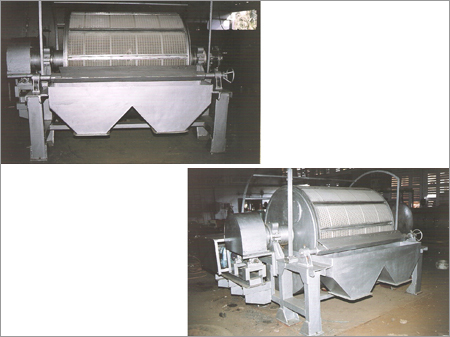
Tell us about your requirement

Price:
Quantity
Select Unit
- 50
- 100
- 200
- 250
- 500
- 1000+
Additional detail
Mobile number
Email

More Products in Industrial Filters Category
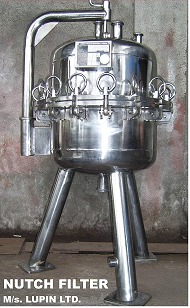
Nutsche Filter
Price 100000 INR / Unit
Minimum Order Quantity : 1 Unit
Material : Other, Stainless Steel (SS304, SS316), Alloy, Hastelloy
Application : Pharmaceuticals, chemicals, dyes, food, and beverages
Efficiency (%) : Up to 99%
Thickness : 6 mm to 12 mm
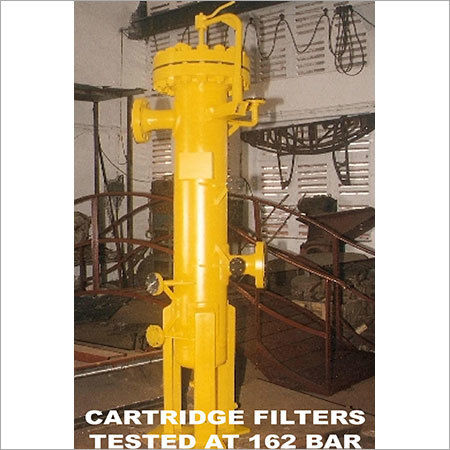
Cartridge Filters
Price 100000 INR / Unit
Minimum Order Quantity : 1 Unit
Material : Polypropylene
Application : Industrial
Thickness : 30 Micrometers (um)
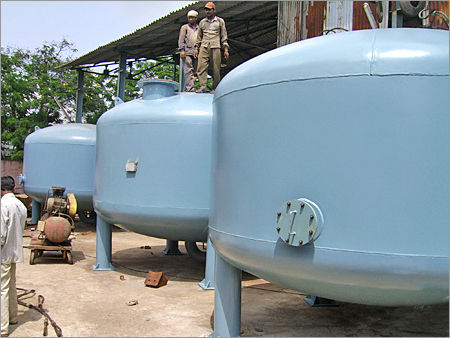
Carbon Filters For Etp
Price 100000 INR / Unit
Minimum Order Quantity : 1 Unit
Material : Other, Activated Carbon, Steel/FRP Casing
Application : Effluent Treatment Plants (ETP), Water Purification, Industrial Filtration
Efficiency (%) : 99.9
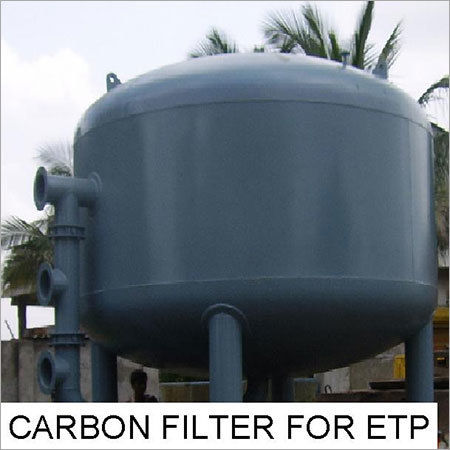
Carbon Filter For ETP
Price 100000 INR / Unit
Minimum Order Quantity : 1 Unit
Material : Carbon Steel
Application : Industrial

"We Have Special Offer For Bulk Inquiry, Looking For Inquiry In Large Quantities"
 Send Inquiry
Our Products
- Chemical Plant Equipment
- Planetary Mixer
- Chemical Reactors
- Chemical Processing Plant
- Heat Exchanger
- Distillation Column
- Limpet Reactor
- Industrial Evaporator
- Industrial Flaker
- Storage Tanks
- Industrial Filters
- Industrial Condenser
- Rotary Vacuum Dryer
- Molecular Sieve Dryer
- Nauta Mixer
- Ribbon Blenders
- Chimney
- Plough Shear Mixer
- Acid Pump Tank
- Copper Fins
- Screw Feeder
- Silos for JSW
- Chemical Tank
- Gas Induction Reactor
- Drum Flaker
- Ploughshare Mixer
- Stainless Steel Handle Water Tank
- Turnkey Services
- Soap Bar Making Machine
- Soap Auto Cutting Machine
- Effluent Treatment Plant Equipment
- Stainless Steel Tanks
- Rotary Vacuum Paddle Dryer


102, A wing Rameshwar Tower, Shimpoli Road, Near Gokhale High School, Borivali (West), Mumbai - 400092, Maharashtra, India

Mr. N. V. Chaudhari
(Proprietor)
Mobile :08045804088
 Send Inquiry
 Send SMS
 Call Me Free
Developed and Managed by Infocom Network Private Limited.


