About Bubble Cap Columns
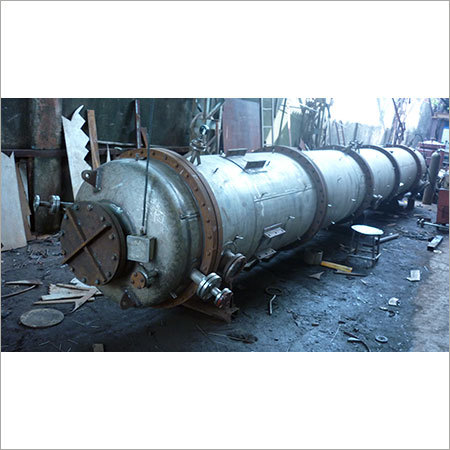
Made of carbon steel, offered Bubble Cap Columns are well known for their 99% filtration capacity. Application of such columns can be noticed in chemical processing plants. Maximum size of such distillation columns is around 150 mm. This size may vary as per customers preference. Bubble Cap Columns are equipped with connecting stud, blister cap, washer, nut and riser pipe. Stainless steel made cap of these distillation components have riser tube that forms a swivel space between riser and cap. Ergonomic design is one of the main aspects of these columns.
Precision Performance for Complex SeparationsBubble Cap Columns provide superior efficiency and adaptability for challenging separation tasks in chemical and industrial plants. With tailor-made dimensions, robust carbon steel construction, and a full suite of custom engineering options, these columns address diverse processing requirements, from heavy-duty distillation to fine fractionation, while maintaining easy operation and minimal maintenance.
Engineered for Reliability and DurabilityEach bubble cap column undergoes stringent hydraulic and pneumatic testing to ensure performance under pressures up to 10 bar and temperatures up to 350C. Premium corrosion-resistant finishes-polished or matt-protect against aggressive media. Integral accessories such as manholes, nozzles, and instrument connections enhance operational convenience and safety.
FAQ's of Bubble Cap Columns:
Q: How does a bubble cap column work in industrial separation processes?
A: A bubble cap column utilizes trays equipped with bubble caps to distribute vapor evenly through the liquid phase, enhancing mass transfer efficiency. This mechanism is effective for distillation, absorption, stripping, and fractionation processes in chemical industries.
Q: What are the benefits of customizing column diameter and bubble caps for a project?
A: Customization allows the column's dimensions and the number of bubble caps to be tailored to specific process requirements, optimizing operational efficiency and throughput while ensuring precise separation performance for each application.
Q: When should I opt for a bubble cap plate design over other tray types?
A: Bubble cap plates are ideal for applications with varying flow rates, foaming tendencies, or corrosive environments. They provide stable operation even at low liquid loads and can handle aggressive media due to their robust construction and design flexibility.
Q: Where can these bubble cap columns be installed?
A: These columns are suited for installation in vertical orientation, typically within chemical processing plants, refineries, or facilities requiring reliable distillation, absorption, or stripping operations. The installation is customized as per plant layout and process needs.
Q: What maintenance is required for bubble cap columns?
A: Bubble cap columns are designed for low maintenance since their robust construction resists corrosion and fouling. Routine inspections and cleaning are recommended, but the need for major servicing is minimized, ensuring continuous operation.
Q: How are these columns tested for safety and performance?
A: Every bubble cap column undergoes both hydraulic and pneumatic testing to verify its integrity and ensure safe operation under maximum pressure and temperature ratings, in line with industry safety standards.
Q: What advantages do these columns offer for industrial separation tasks?
A: Bubble cap columns offer high separation efficiency, robust construction, operational flexibility, and compatibility with aggressive media. With options for automatic controls and advanced customization, they are a preferred choice for demanding processes in the chemical industry.







 Send Inquiry


 Send Inquiry
 Send Inquiry
 Send SMS
 Call Me Free


